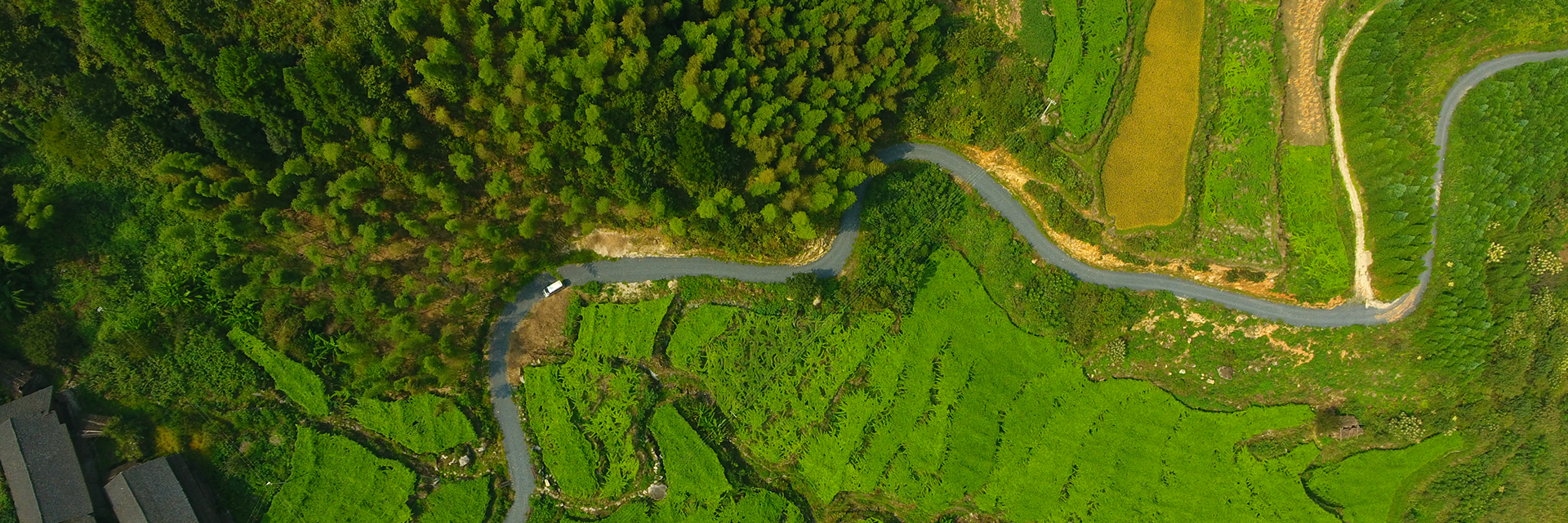
Monk fruit extract earns that headline in one direction. Its sweetness comes from mogrosides, mainly mogroside V, at roughly 250 times the sweetness of sucrose, so a dose is measured in milligrams per litre and adds no meaningful energy. The extract holds up through pasteurisation, retort and baking and across the acid pH range of soft drinks.
The possibilities narrow at three points. Market access: the United States works through GRAS notices, and the European Union has not authorised the extract as a food additive. Grade: the mogroside V percentage sets your addition rate, and at V90 that rate becomes a weighing problem. Function: it replaces sweetness, and sugar was doing other work. Place those three first and the range stays wide.
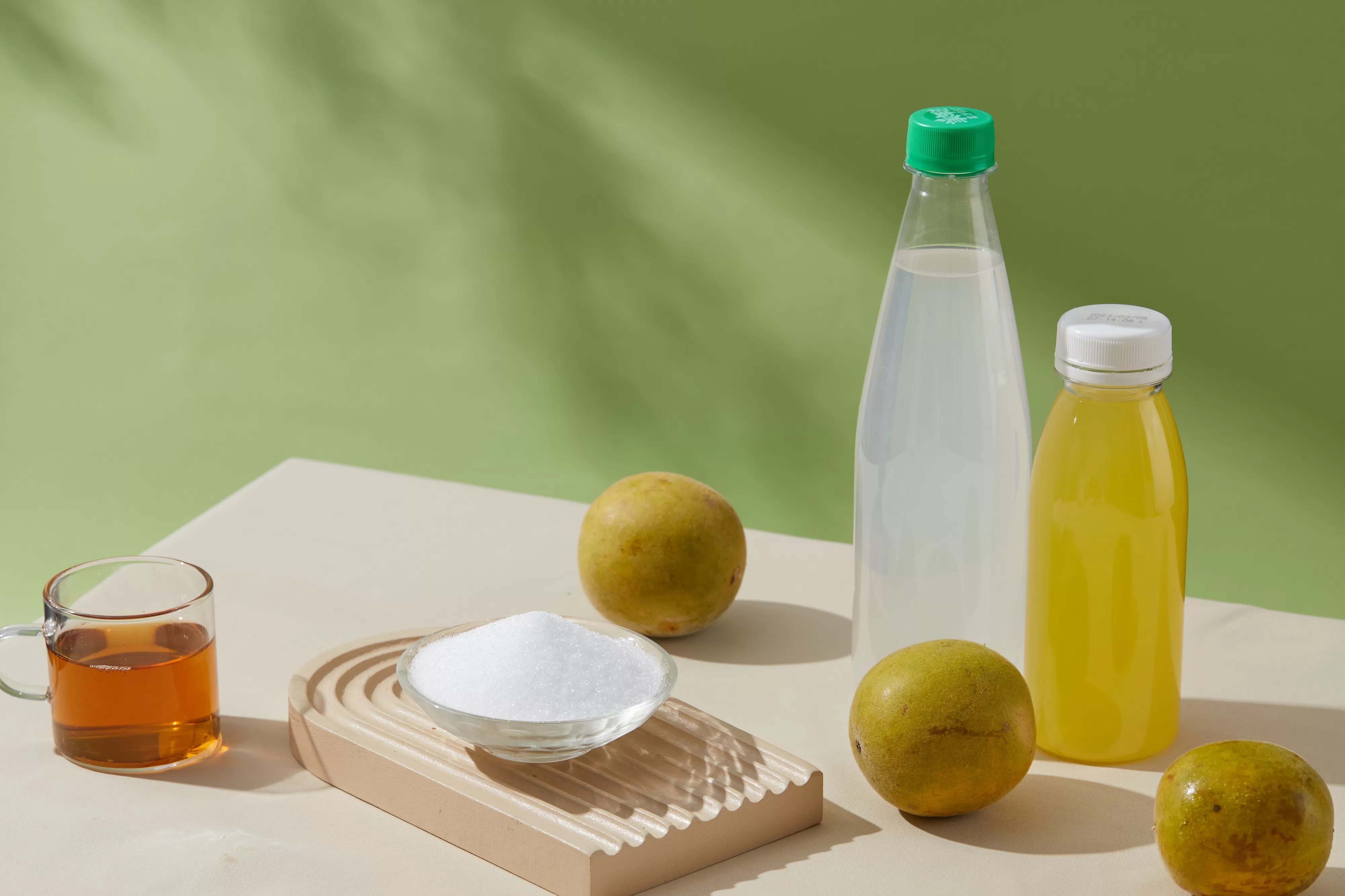
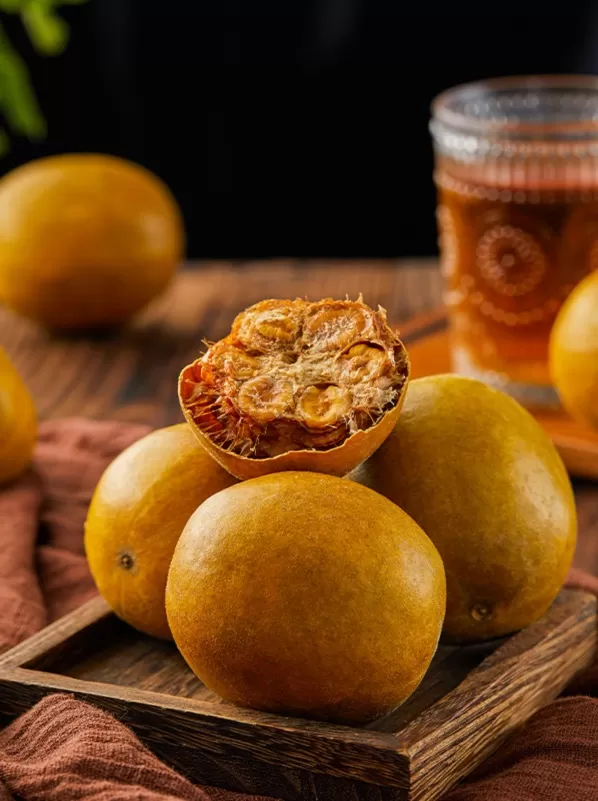
H2-Luo monk fruit extract is specified as mogroside V 1.5% to 98%, supplied at V20, V25, V40, V50, V55 and V90 and assayed by HPLC against a mogroside V marker. EFSA assessed extracts at 25 to 55% mogroside V and put mogrosides at 0.55% to 0.65% of the fresh fruit. The grade sets how much powder carries a unit of sweetness.
That drives two plant decisions. A V90 material delivers the sweetness of a far larger mass of V20, which tightens weighing accuracy and makes a scale error louder in the batch; a partial reduction often runs better on a lower grade, where the rate stays large enough to weigh comfortably. Colour pulls the other way: powder runs light yellow at low grades and white at V90, and residual pigment carries into the finished product.
In the United States the position runs through GRAS notices. FDA states it has not questioned the notifiers' GRAS determinations for monk fruit extracts under the notified uses, and that no ADI has been specified. Huacheng Bio is the notifier of GRN 556, filed 29 December 2014 and closed 17 June 2015 with FDA responding that it had no questions. The intended use is tabletop sweetener and general purpose non-nutritive sweetener in foods other than infant formula and meat and poultry products.
Read that clause before relying on it: a notice covers the notified substance at the notified uses, and those two categories are excluded. Check it against your own category and dose; more detail is in the monk fruit regulatory status article.
Europe is a different case. EFSA's Panel on Food Additives and Flavourings adopted an opinion on 13 November 2019 (EFSA Journal 17(12):5921) concluding the toxicity database was insufficient to conclude on safety as a food additive. It cited a decrease in testis weight with histopathological findings in a 90-day rat study at 52% mogroside V whose adversity could not be ruled out. Monk fruit extract has not been authorised in the EU, so a European launch is a regulatory timeline question before a formulation one.
Monk fruit extract is stable through pasteurisation, retort and baking and stable across the acid pH range of beverages. Aspartame loses sweetness when heated, and that difference is why monk fruit reaches baked goods and retorted dairy. Test it at your own time, temperature and pH.
Format is the other decision. The H2-Luo concentrated juice runs 1% to 10% mogroside V by HPLC and ships at 1, 1.5, 3, 8 and 18 times sugar, with a pH window of 3.5 to 7.0 at 65 to 70 brix. A liquid at 1 to 3 times sugar doses easily in a syrup room but carries colour and fruit character, which suits beverage and dairy lines. Pesticide residues on that line are stated to conform to GB2763 and USP36.
Sensory behaviour sets the ceiling on single-ingredient use. Onset is slower than sugar, sweetness lingers, and a faint fruity note turns liquorice-like as dose climbs. That is what blends manage.
The fit is real across these categories. What differs is the problem each one hands back.
| Application | What monk fruit does there | What you still have to solve | Format to trial |
|---|---|---|---|
| Beverages, still and carbonated | Acid-stable, survives pasteurisation | Body and mouthfeel; colour at low grades | V50 to V90, or juice at 8 to 18x sugar |
| Dairy drinks and yoghurt | Works with dairy flavour | Lactose still counts as sugar; texture follows solids | V50, or juice |
| Baking | Survives oven temperatures | Bulk, crumb, browning, surface colour from sucrose | Blend with fibre, allulose or erythritol |
| Candy and confectionery | Extends sweetness and flavour | Boil temperature, glass transition, crystallisation | Juice, or a polyol blend |
| Drink mix and powders | Cuts sugar in a dry system | Particle size and dissolution; 80 mesh line | V25 to V50 |
| Table sugar and sachets | Soft taste, high solubility | Spoon-for-spoon use needs a carrier | Blend at 1 to 4x sugar |
Two rows carry a claim worth testing. The beverage sweetener application is specified for lasting sweetness with no effect on colour, the pair most at risk when a clear drink drops to a threshold. The dairy application is specified as synergistic with dairy flavours and reducing dairy odours. Run both against sucrose.
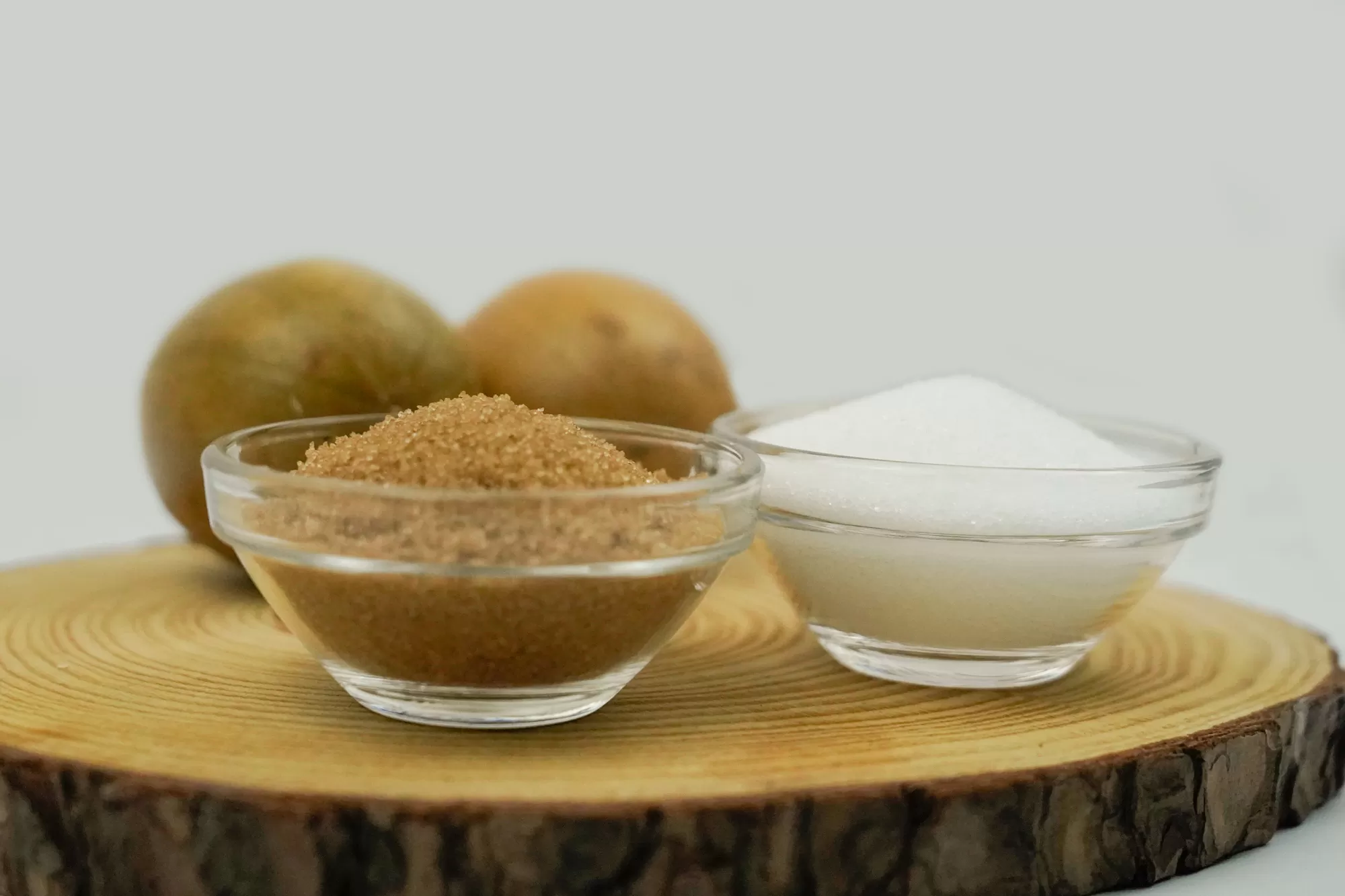
The extract contributes negligible energy at use level. It still only replaces sweetness, and sugar was carrying bulk, browning, freezing point and mouthfeel at the same time, which is why blends exist. Huacheng Bio's H2-Luo blend range ships at one to four times the sweetness of sugar across erythritol, stevia plus erythritol, allulose, dietary fibre and custom carriers. A 1 time sugar blend lets a plant keep dosing by weight.
Cost per kilogram rises and the carrier brings its own label position: in the EU, foods with more than 10% added polyols must carry a laxative-effect statement, and any product containing a sweetener carries "with sweetener(s)", or "with sugar(s) and sweetener(s)" where added sugars remain. Baking is where it bites hardest, since crumb and colour come back only from something else, so the baking application is a blend project.
Zero calories describes the ingredient at dose. On the pack it becomes a nutrition claim: in the EU, "sugars-free" requires no more than 0.5 g of sugars per 100 g or 100 ml, and energy claims carry their own conditions under Regulation (EC) No 1924/2006. Confirm the rule for every market.
Short enough for one email, specific enough to compare two quotations.
Name the category, the sugar level you have to reach and the market. Huacheng Bio can match an H2-Luo mogroside V grade or blend format to that brief and send an identified sample for your own assay.
Request an application review and sampleMogroside V is roughly 250 times as sweet as sucrose, and commercial extracts standardised on it land between 100 and 300 times depending on assay and matrix. Convert that into a dose by measuring sweetness equivalence in your own base at your own pH.
In the US, FDA has not questioned the GRAS determinations for monk fruit extracts under the notified uses and no ADI is specified; Huacheng Bio's GRN 556 closed in June 2015 with FDA stating it had no questions, covering foods other than infant formula and meat and poultry products. In the EU, EFSA concluded in 2019 that the toxicity database was insufficient and the extract has not been authorised. Confirm the position for your market and category with your regulatory reviewer.
Start from the addition rate your plant can weigh and the colour your product can absorb. V50 is the common starting point. V90 suits a clear beverage or pale dairy where pigment would show and dose is tiny. A lower grade suits a partial reduction.
Not in most recipes. It replaces sweetness; bulk, browning, freezing point and mouthfeel have to come from somewhere else. The blend range at one to four times the sweetness of sugar puts those back, using erythritol, allulose, dietary fibre or a stevia and erythritol combination. Run the sweetness and structure trials together.
Ask for the specification for the exact grade, a certificate of analysis from a recent lot, the mogroside V result with its HPLC method, total mogrosides, heavy metals as lead and arsenic, residual ethanol, microbiological counts, and the lot identifier on the packaging. Keep it with your sensory notes.







 EN
 EN
 CN
 ES
 PT
 SV
 DE
 TR
 FR
 AR
 BG
 HR
 CS
 DA
 NL
 FI
 EL
 HI
 IT
 JA
 KO
 NO
 PL
 RO
 RU
 CA
 TL
 IW
 ID
 LV
 LT
 SR
 SK
 SL
 UK
 VI
 SQ
 ET
 GL
 HU
 MT
 TH
 FA
 AF
 MS
 GA
 BE
 UZ